::: COMMUNITY NEWS

Don't cut down trees near RM Airport, county report recommends

Published Thursday, January 23, 2003

A county report recommends that trees on parkland next to Rancho Murieta Airport should not be cut down and that the airport should be allowed to resume night operations only if it can get a safety variance to operate with the trees still standing.

It's likely the trees, some of them predating the Gold Rush, were just as great a safety issue when the airport began operating more than 30 years ago, the report says, and certainly the trees should have been a concern when Caltrans approved night operations in 1990.

The report, by Jill Ritzman, county deputy director for regional parks, goes to the county Board of Supervisors in advance of a hearing on the matter next month.

Previous coverage

Airport cuts down 20 trees near runway and awaits county decision on 20 more (August 18, 2002)

County orders 10 trees removed at airport -- and saves daytime flight operations (May 1, 2002)

State says airport trees must be cut by May 31 or all flights will be halted (April 26, 2002)

Airport oaks face ax (April 11, 2002)

"The threshold decision before the board is whether or not to allow night operations at the Rancho Murieta Airport," the report says. "If the board does not allow night operations, no further action to remove, trim or light trees is necessary."

It recommends that the trees be preserved and that the airport seek a variance to operate at night. Without that variance, the report says the county's only sure way to allow night operations is to remove and trim 40 or 50 trees to fully comply with requirements for a clear zone along the runway.

Removing and trimming the trees would cost $70,000, not including the cost of surveys, hearings and mitigation, the report says.

Lighting the trees -- another possible approach to address safety issues -- would cost almost $290,000 for five beacons on 100-foot poles, it says.

In any case, the report recommends that costs be the airport's responsibility, not the county's.

In a letter included with Ritzman's report, Gary F. Knudsen, a Caltrans aviation-safety officer, says the trees are "without a doubt a public safety issue."

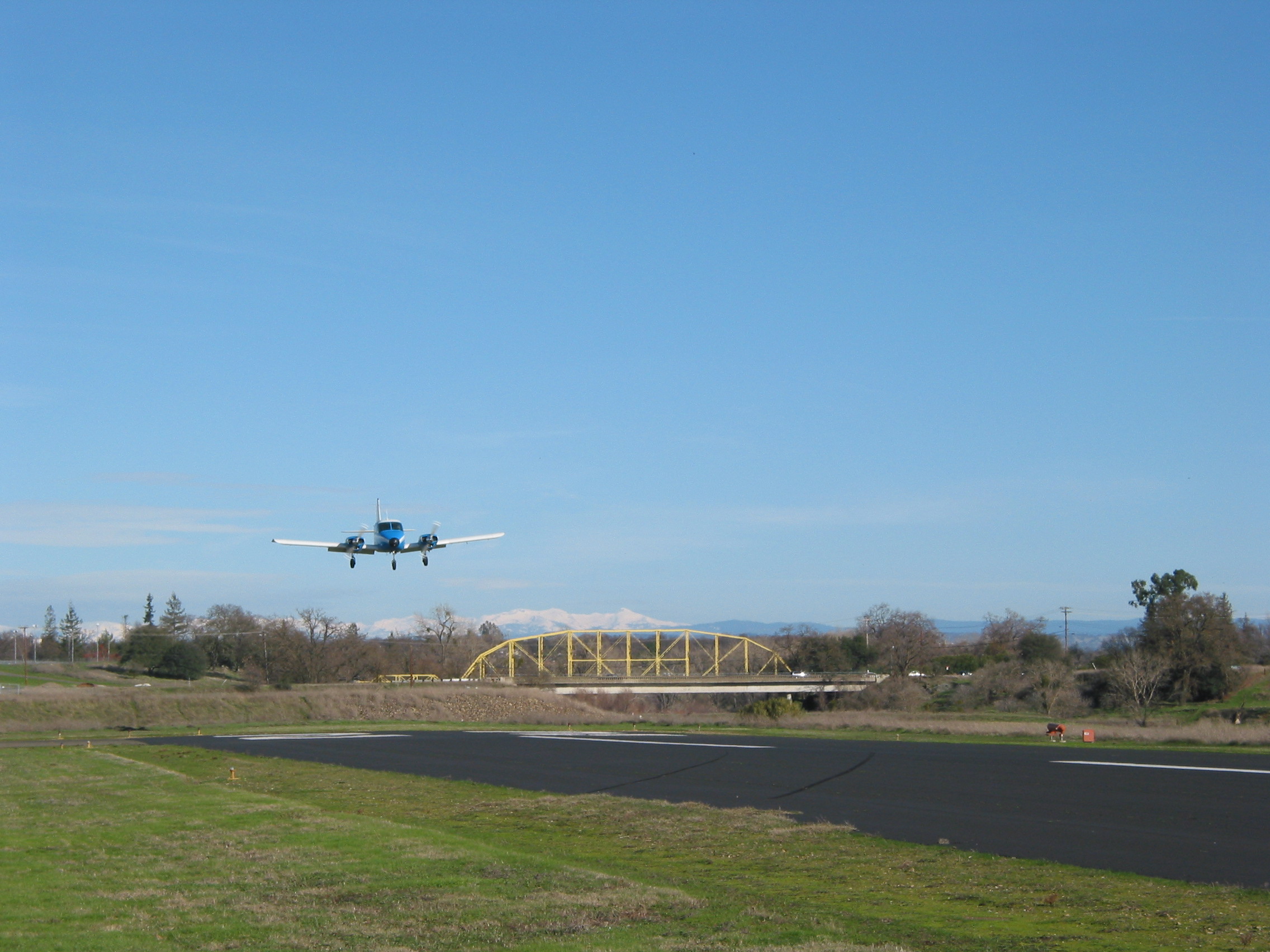
They line one side of the runway, between the airport and the Cosumnes River. The airport and adjoining land once belonged to Rancho Murieta's developers. The county took title to the land along the river in 1979, when the developers swapped it for the Yellow Bridge.

In 2000, citing safety concerns, Caltrans limited the airport's night operations to tenants and local pilots, and in 2001 it suspended night operations altogether.

Last year, claiming daytime operations were now in jeopardy as well, the airport's owners asked the county to cut down the parkland trees among a total of 69 trees that needed to be felled or trimmed to make the runway safe.

At a hearing in April, under questioning by the supervisors, a Caltrans official acknowledged that the airport's daytime operations could be preserved by cutting down or trimming only 10 oak and cottonwood trees on county property at one end of the runway.

The supervisors ordered that those trees be addressed promptly and that county staff work up a plan to save as many of the other trees as possible.

Ritzman's report says the county immediately hired a contractor to do the tree work at the end of the runway, preserving the airport's daytime operations, and then presented the $11,175 bill to the airport, which denied the cost was its responsibility.

Last summer, the airport cut down 20 trees along the runway, apparently on its own property.

The airport is owned by the estate of the late businessman Fred Anderson.

An airport representative told the supervisors last year that there was a buyer for the airport and the sale hinged on having the night operations permit.

Do you have comments about this topic or story? Share them at RanchoMurieta.com's Community Views page.