Court
sides with RM Airport in fight over trees that line the
runway
Published
Monday, February 28, 2005
Rancho
Murieta Airport has achieved a substantial legal victory
in a long-running fight with the county over the potential
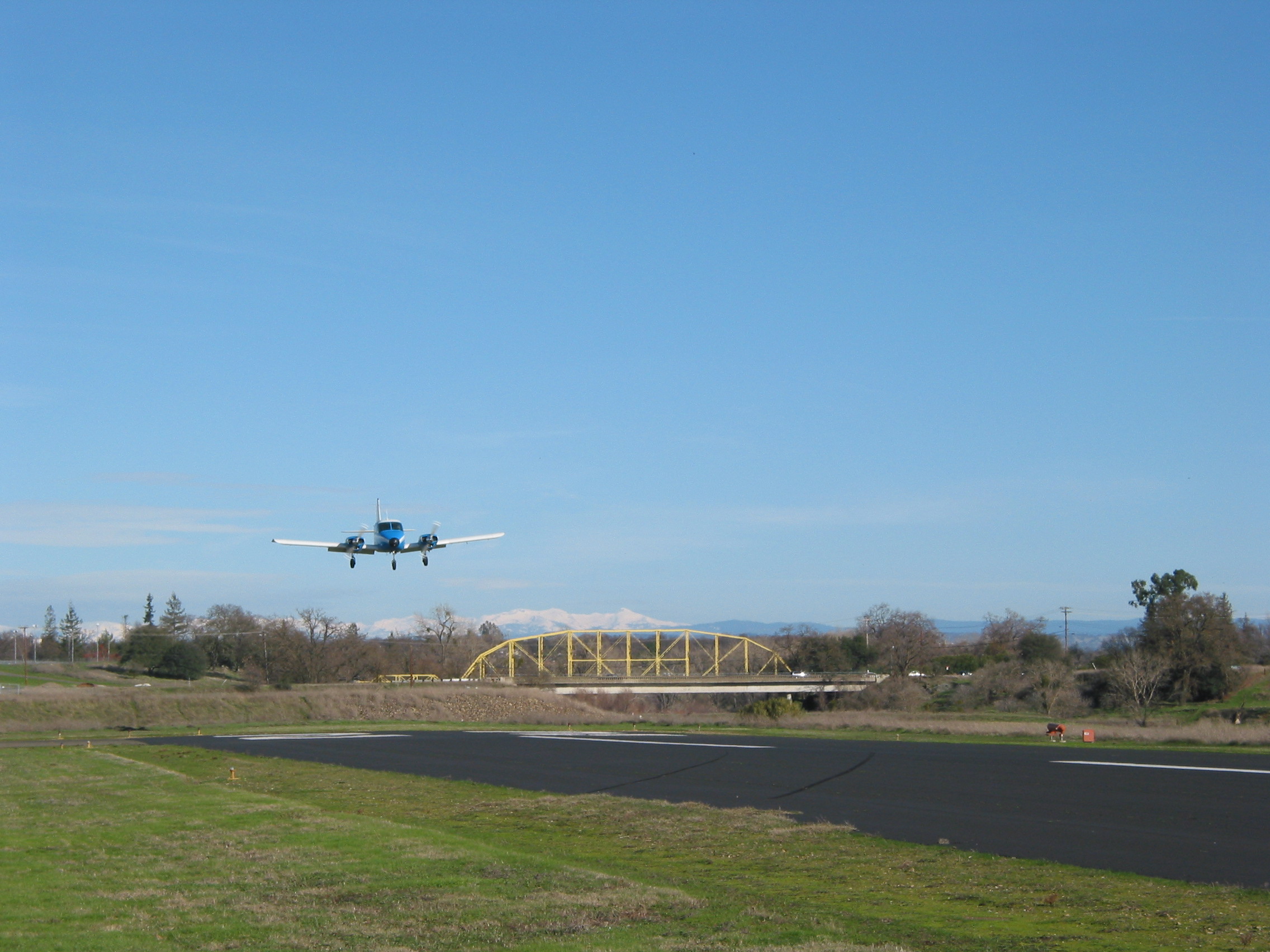
safety hazard of trees that line the runway.
A Sacramento
County Superior Court ruling,
issued Feb. 18,
supports the airport's position that the county is "legally
required to trim and/or remove the trees because they exceed
the applicable height limits established for airport safety."
The trees are on county parkland bordering the Cosumnes
River.
The
Pension Trust Fund of the Operating Engineers exchanged
the property for the Yellow Bridge in the late 1970s. The
airport is owned by the estate of the late businessman Fred
Anderson.
The
airport's night operations permit was suspended by the California
Department of Transportation in 2001 because of the tree
hazard.
Over the past
three years, the tree issue has been brought before the
county Board of Supervisors several times. While the county
agreed to cut down 10 trees at the end of the runway to
maintain day operations at the airport, it refused to trim
or cut down the trees bordering the river, which include
heritage oaks and rare, old-growth California black walnut
trees.
The airport cut
or trimmed 20 trees on its property in 2002. The rest of
the 69 trees intruding into the air space are on the adjoining
county-owned land.
In 2003, the
county issued a study that called for a full environmental
impact report before the county trees could be cut down.
The report estimated the cost of mitigation measures could
run from $200,000 to $400,000 or more since the trees are
part of a riparian forest that shelters endangered species
of animal, bird and plant life.
Last May, the
airport petitioned Sacramento Superior Court for a writ
of mandate to compel the county to comply with state and
county laws prohibiting obstructions for safety reasons.
The
court ruling quotes federal regulations, state law and the
county's own ordinance in holding the county responsible
for eliminating the hazard, and "easily disposes" of
the county's arguments, saying one "appears to be a
red herring."
The county argued
that trees existing at the time the airport was constructed
were exempt; that the county had never approved the airport's
application for night operations; that the trees could not
be trimmed or removed until an environmental review was
conducted, and that Caltrans had granted a variance to allow
the trees in the clear zone.
The
eight-page ruling specifically states that it does not address
whether the county or the airport needs to comply with the
provisions of the California Environmental Quality Act or
"who ultimately should be responsible for any costs incurred
to trim or remove the trees."
County Counsel
Robert Ryan declined to comment on the outcome of the lawsuit.
According
to Jim Thompson, a member of the board that oversees the
airport for the Anderson family trust, after the court signs
the final order, "the county will then have to pursue how
and when it will comply with the order. … Our attorneys
will be meeting with their attorneys and doing whatever's
appropriate to comply with the judgment."
As to
when night operations will return, Thompson said, "It isn't
going to happen overnight. Once the order is complied with
and Caltrans is satisfied that night operations can resume,
then night operations will resume."
Thompson
declined to comment on the future of the airport, saying,
"Any business dealings would be private and confidential."
When
airport representatives approached the county about the
trees in 2002, they said there was a cash offer for the
airport contingent on having both daytime and nighttime
operations. "The buyer went away. … The buyer couldn't
wait forever," said Thompson.